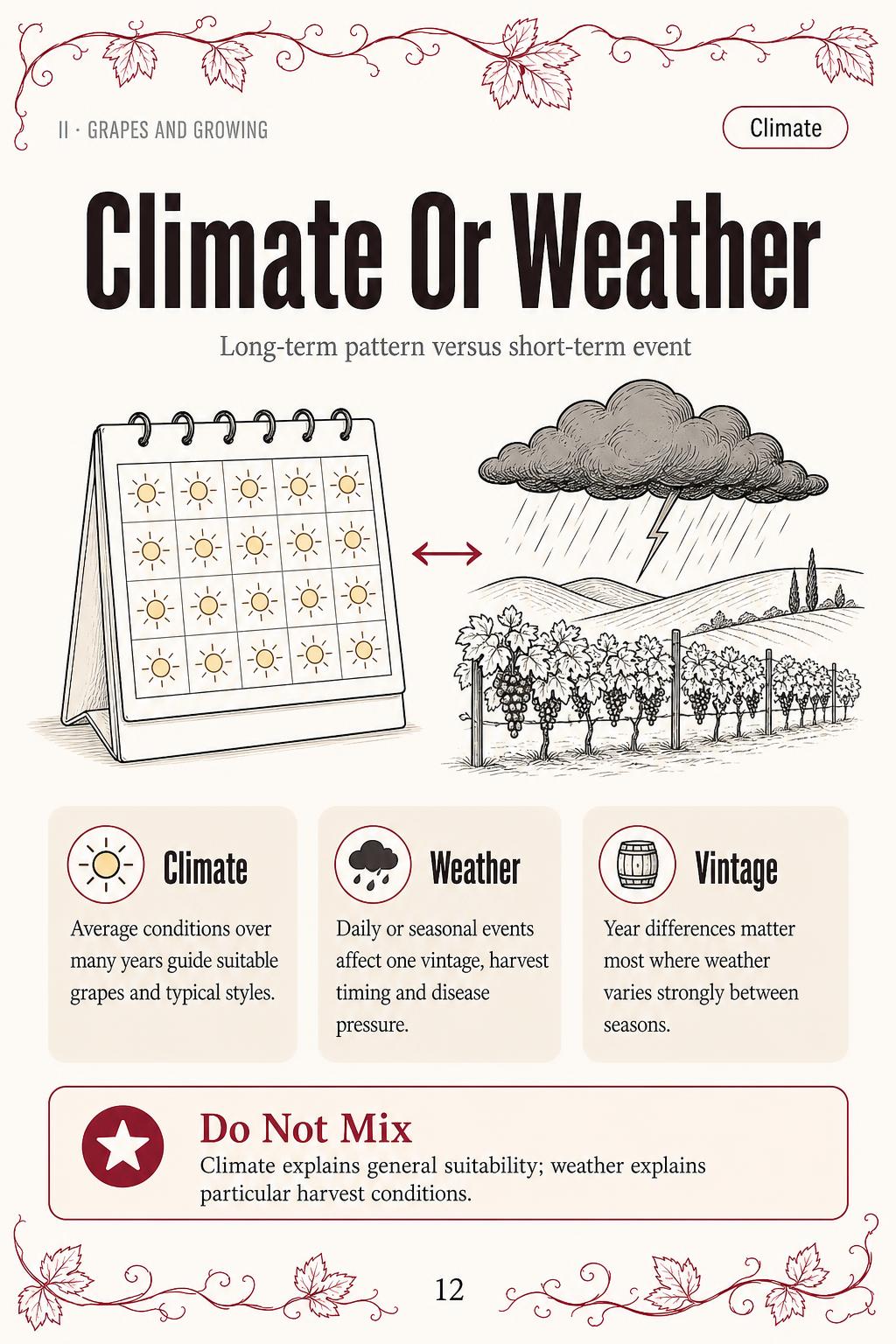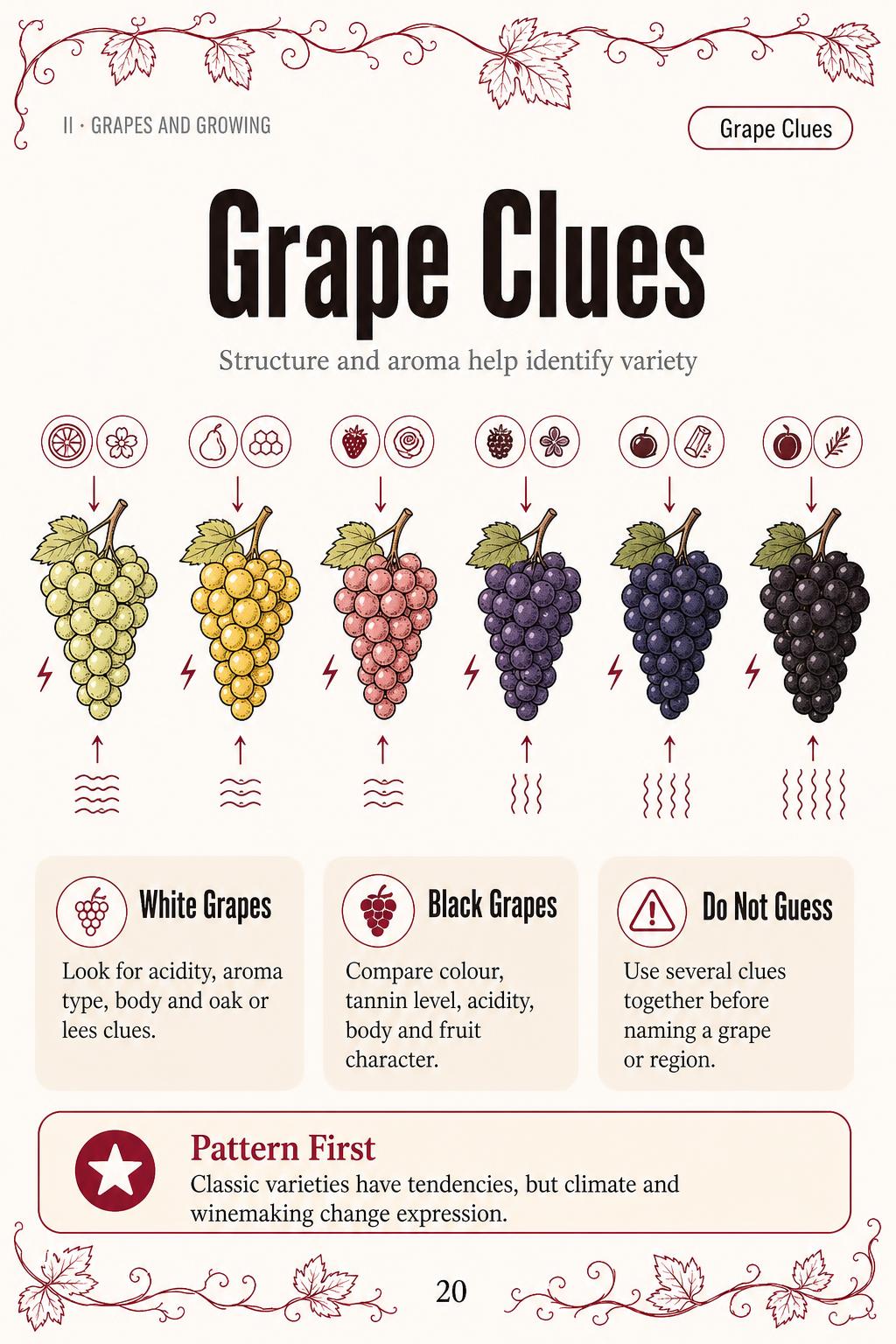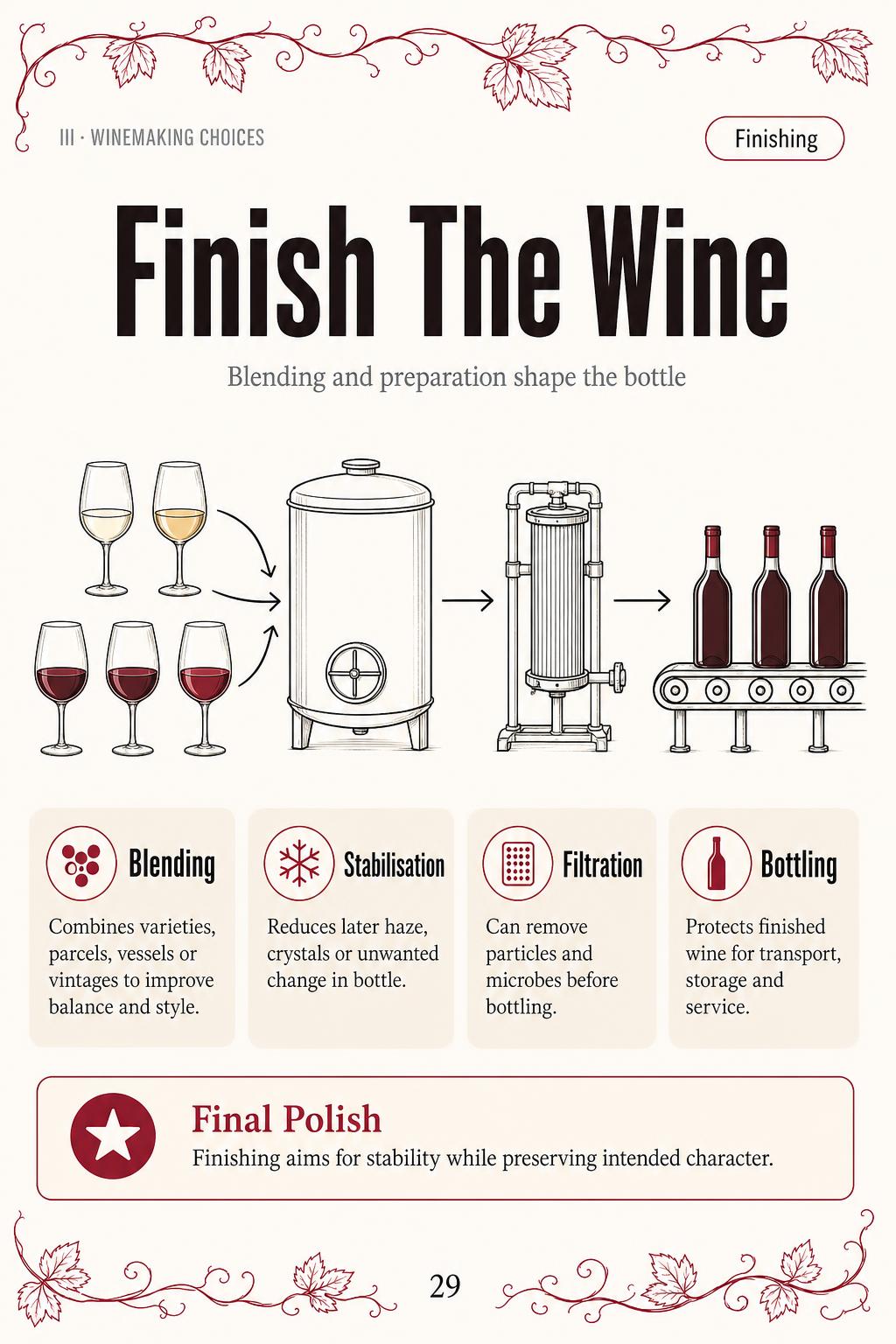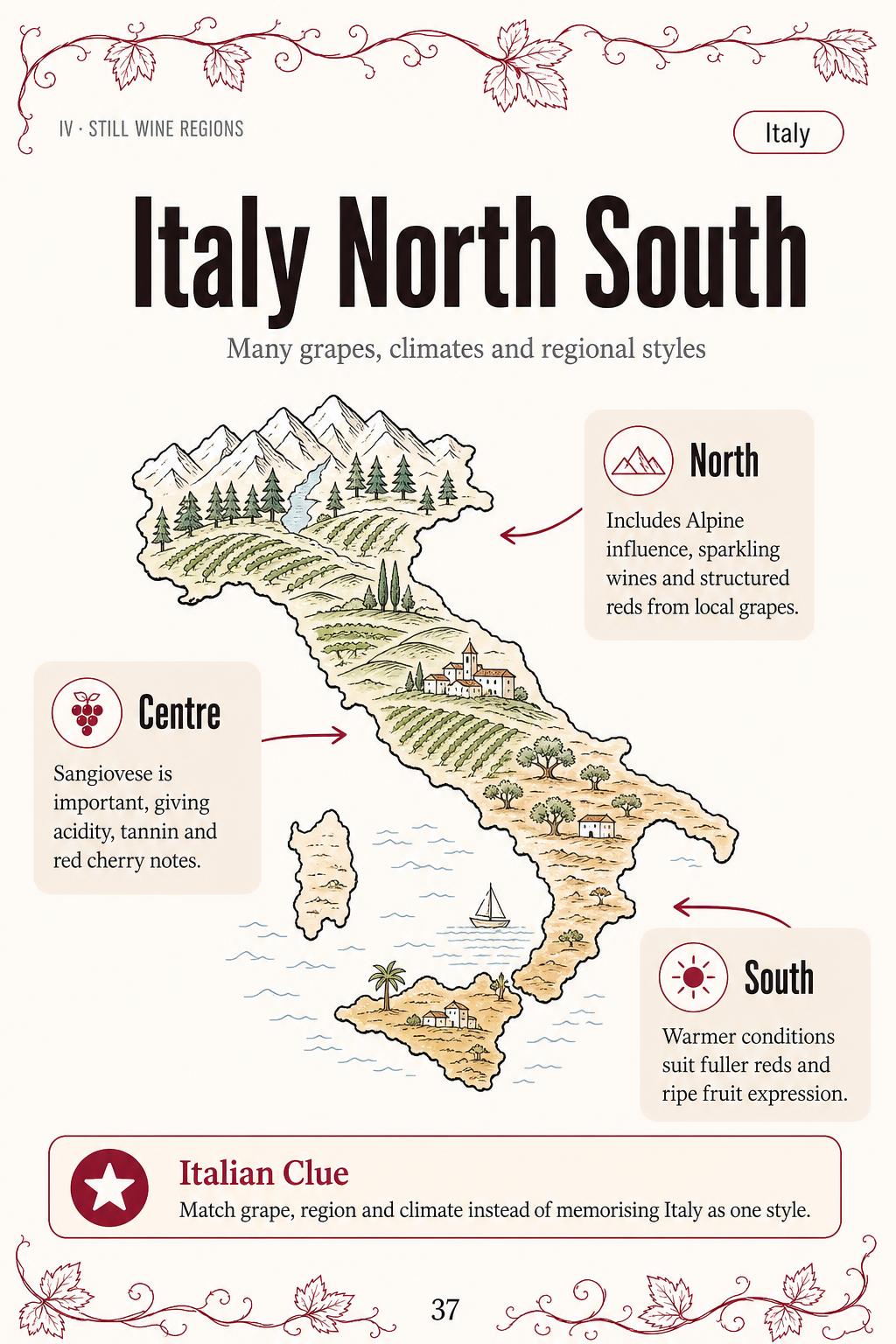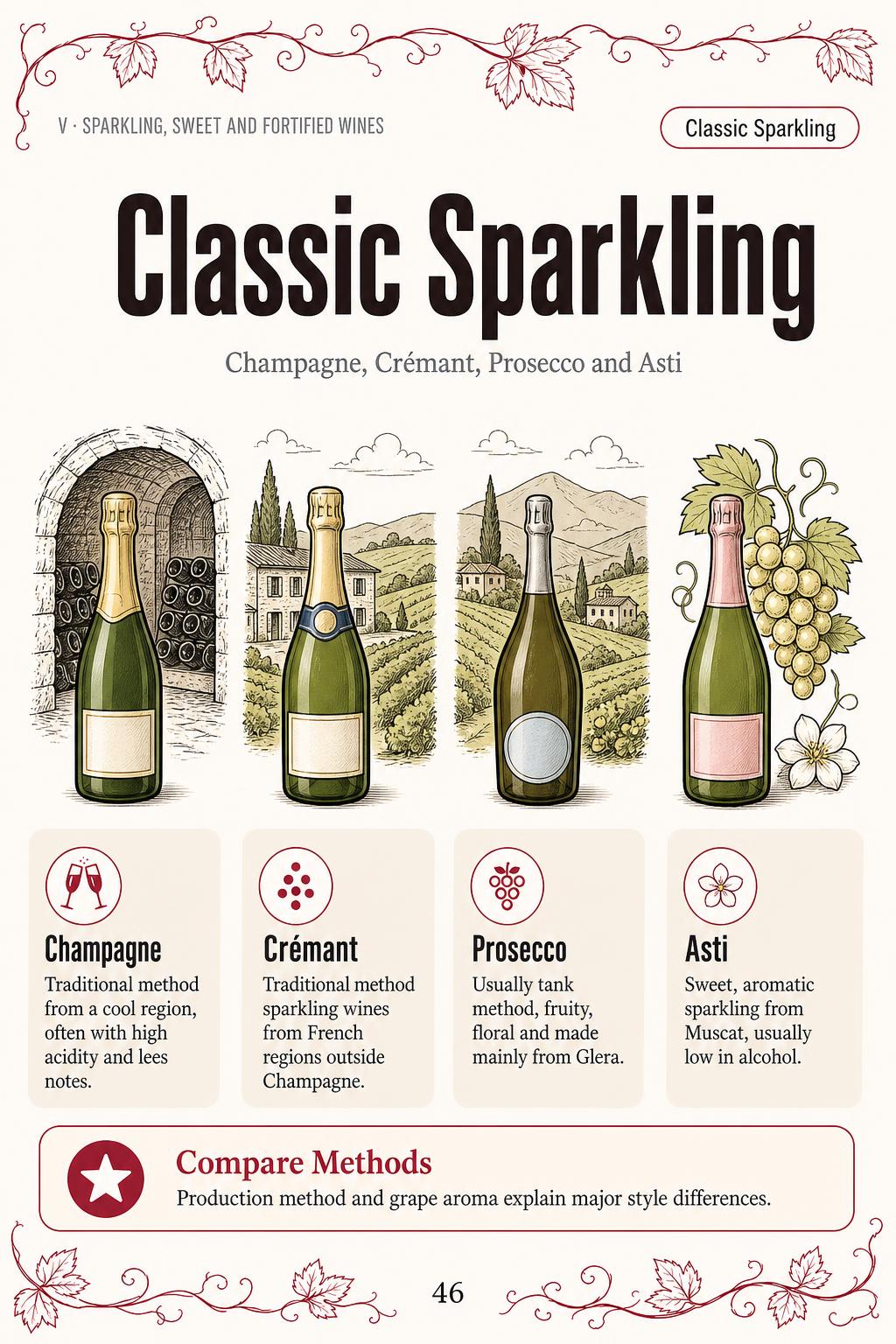


This illustrated PDF guide turns key WSET Level 2 and Level 3 topics into visual revision pages. It covers grape growing, climate, winemaking choices, classic regions, sparkling and fortified styles, service, food matching and practical tasting language.
Get the illustrated guideSecure checkout, PDF sent by email, and a 7-day refund guarantee.
the drawing shows you the rule and the text backs it up
7 parts, from tasting method to exam-day practice
WSET Level 2 and Level 3 Award in Wines Specifications
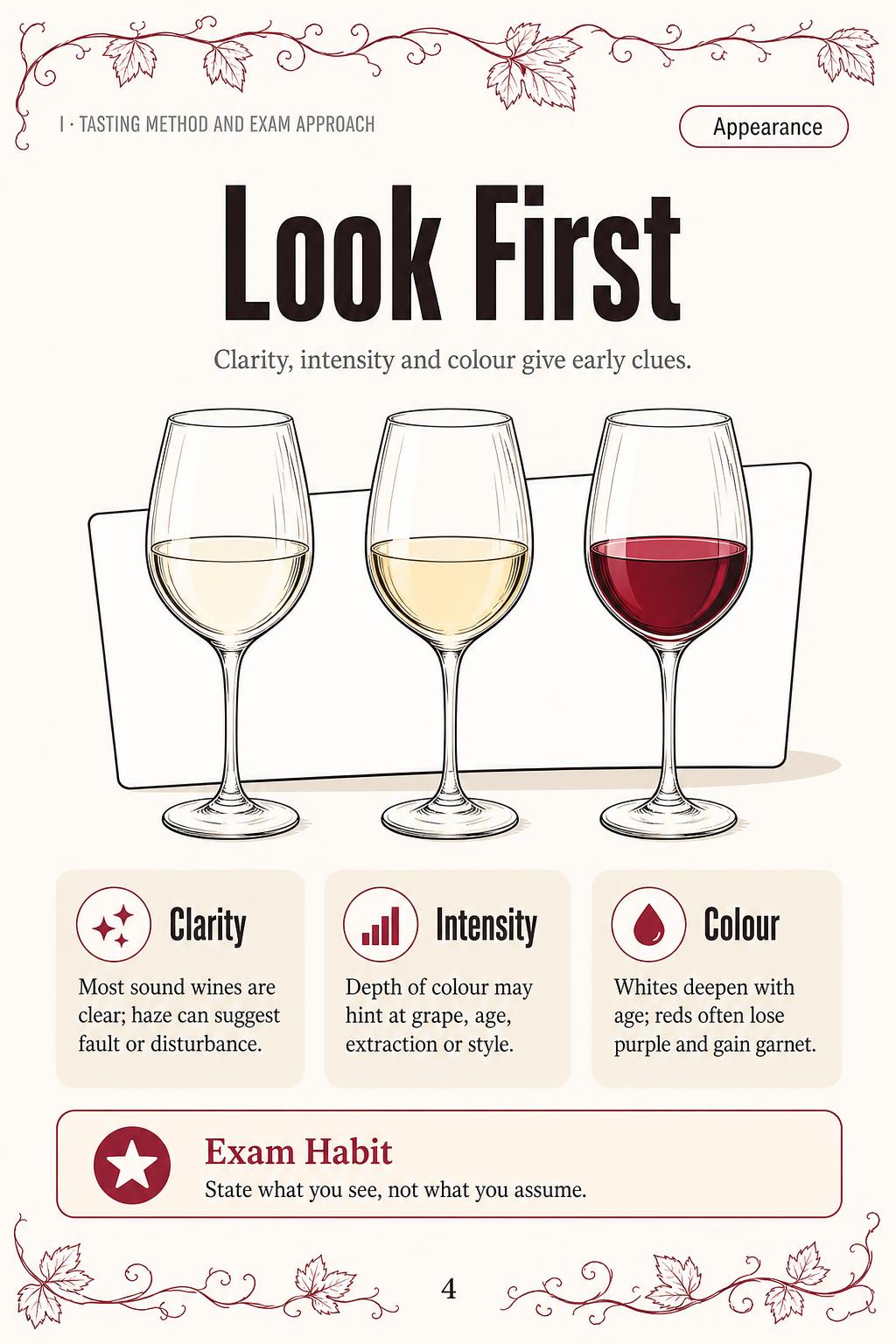
The guide includes pages such as climate versus weather, malolactic conversion, Bordeaux Left Bank and Right Bank, traditional method sparkling wine, Sherry styles, food matching principles and short-answer structure.


It is an independent visual companion, not an official WSET publication or a replacement for your course materials.
You have paid for the course, booked the date and opened the workbook after a long shift or a full day at your desk.
You read the same paragraph about climate, grape varieties or winemaking again. The words make sense while you are looking at them, then blur together as soon as you close the book.
Your notes become lists: acidity, tannin, body, oak, lees, continental climate, maritime climate. Useful words, but not a picture you can recall under pressure.
Then you try a practice question and realise the problem is not just knowing facts. It is linking the grape, place, method and tasting note quickly enough to answer clearly.
It is not your fault. Wine exams often ask visual, connected questions, while much of the material is presented as long, similar-looking text.
Malolactic conversion is a bacterial process in which sharper malic acid is converted into softer lactic acid and carbon dioxide. It is commonly encouraged in many red wines and some full-bodied white wines, particularly where a rounder texture and buttery or creamy characters are desired. It may be blocked in aromatic white wines when the winemaker wants to preserve fresh acidity and primary fruit expression.

Each part groups related topics so you can revise by theme: tasting, vineyard, winery, regions, styles, service and exam practice. Every page is designed to stand alone, so you can study one topic in a short session or print the pages you need most.
You sit down with the PDF and choose one page: perhaps acidity, oak, Bordeaux, or traditional method sparkling wine.
The drawing gives you the shape of the idea first. The short notes then add the words you need for class, tasting notes and practice questions.
Instead of copying paragraphs, you mark the page, compare it with your course material and build a mental map of how the topic works.
When a question asks why a wine tastes a certain way, you can trace it back: climate, grape, ripeness, winemaking, maturation and final style.
Revision still takes effort, but the work feels organised, visible and easier to return to.

This part organises appearance, nose, palate and quality assessment into clear visual steps. After it, you can use tasting words more deliberately and connect them to the reasons behind a wine’s style.
This part shows how vineyard conditions shape grape ripeness, acidity, tannin and flavour. After it, you can explain why a place produces a particular style rather than memorising regions as isolated facts.
This part turns cellar decisions into simple cause-and-effect diagrams. After it, you can link fermentation, extraction, oak, lees and blending to the flavours and structures described in tasting notes.
This part maps major regions by climate, grape varieties, labelling clues and typical styles. After it, you can compare classic places more confidently and explain how region and grape work together.
This part explains the production paths that create bubbles, sweetness and fortified styles. After it, you can recognise the method behind the wine and describe the expected structure and flavours.
This part covers practical wine handling and the logic behind successful food pairing. After it, you can serve, store and match wines with clearer reasons instead of relying on vague rules.
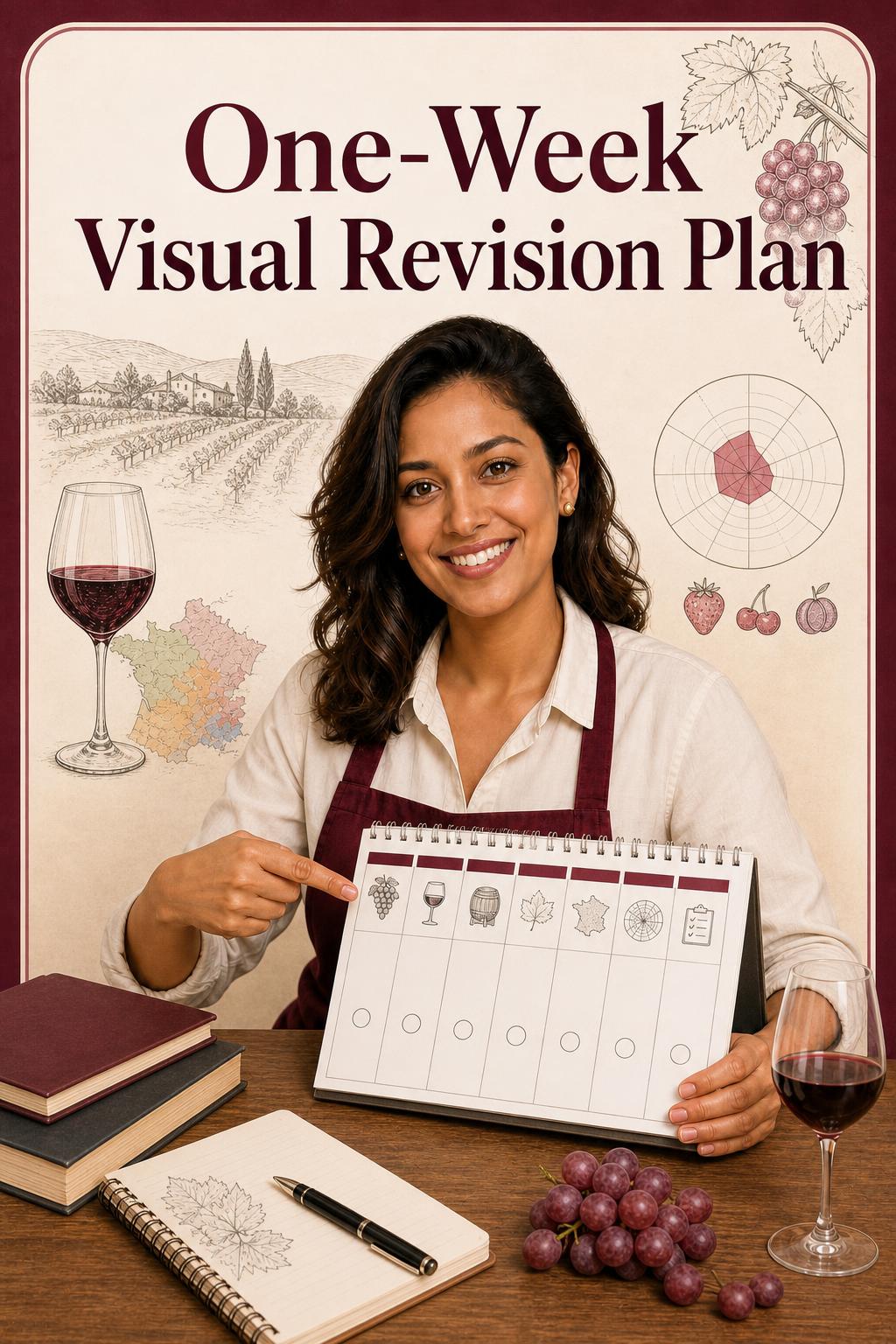
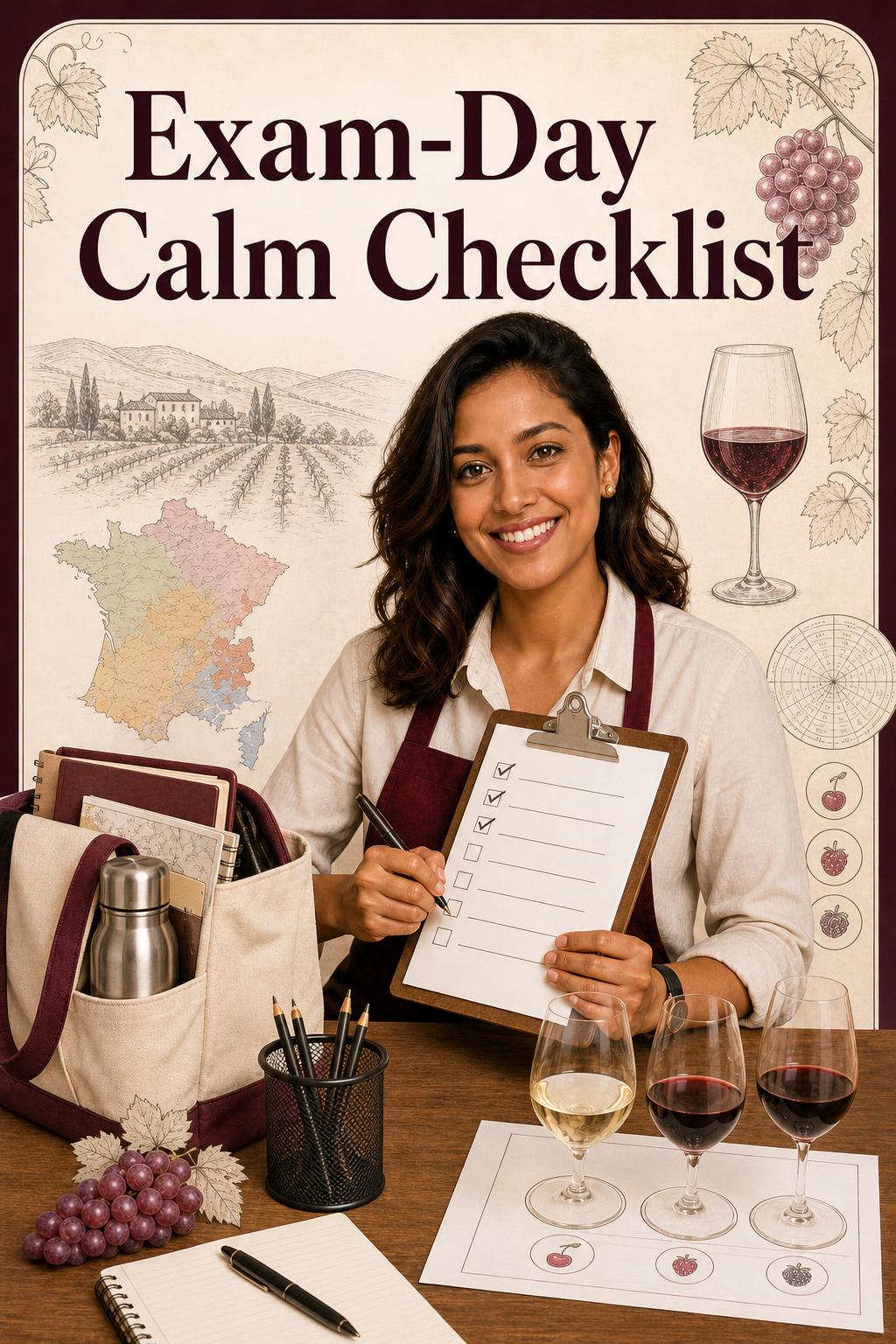
This part helps you turn knowledge into answers and revision sessions. After it, you can plan practice, structure responses and check weak spots without feeling lost in the syllabus.
The guide ends with a simple final-week checklist so you can choose what to revise next without opening every book at once.


Total value: US$ 74
Complete illustrated PDF guide
You save US$ 36
Get the illustrated guide · US$ 38The guide arrives by email within a few hours of the purchase. You can then save the PDF to your device and print the pages you want to mark up.

Use the guide to build a clear framework before the details pile up. It helps you see how vineyard, winery, region and tasting topics connect.

Use the one-page topics for focused revision when you have limited time. The pages make it easier to choose a weak area and practise explaining it.

Use the guide between shifts to connect course theory with bottles, service and food matching. It gives you practical language for explaining style without overcomplicating it.
Not the right fit if you want An official WSET textbook or official exam material. · A guarantee of a particular exam result. · A complete wine encyclopedia covering every producer and vintage.
You have 7 days to read through the guide and decide whether it suits your study style. If it is not useful for you, contact us within that period and you will receive a full refund.
No. It is an independent visual study companion for people studying WSET Level 2 or Level 3 wines. It does not replace your official course materials or any guidance from your course provider.
It is a PDF guide with illustrated study pages. You can open it on a phone, tablet, laptop or desktop using a normal PDF reader.
The PDF is sent to the email address you use at checkout within a few hours of purchase. Please check your spam or promotions folder if you do not see the message.
It is designed for both WSET Level 2 and Level 3 wine students. Level 2 students can use it for the core concepts, while Level 3 students can use the same pages to build clearer explanations and comparisons.
Yes. The pages are designed to be printable so you can annotate them, add examples from your course, and build your own revision folder.
It helps organise tasting language and connects tasting notes to grape growing and winemaking. It is a study companion, so it works best alongside actual tasting practice and your course sessions.
No guide can honestly guarantee an exam result. This guide helps you revise the material in a clearer visual format, but your result depends on your study, practice and the exam itself.
You are covered by the 7-day refund guarantee. If the format is not useful for your study style, contact us within that period for a full refund.
If your wine notes are starting to feel scattered, this guide gives you a calm, visual way to organise the main ideas and keep moving through the syllabus.
Get the illustrated guideSecure checkout, PDF sent by email, and a 7-day refund guarantee.